 By
By 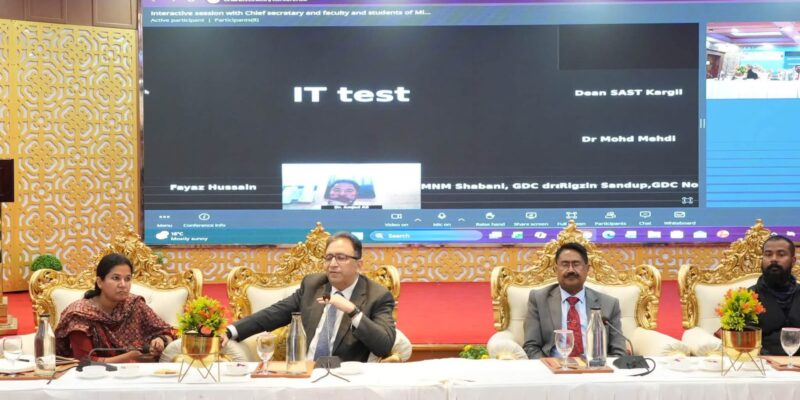
Leh, September 22, 2026: Chief Secretary, Union Territory of Ladakh, Ashish Kundra, held an interactive session with around 60 students of Miranda House, University of Delhi, at The Zen Ladakh, Leh, who are on an academic field visit to Ladakh to undertake research and gain first-hand understanding of the region’s society, geography, culture and socio-economic landscape.
The interaction began with introductory remarks by Secretary, School Education, Bhanu Prabha, who highlighted that the students had come to Ladakh to study and learn about its unique social, geographical and cultural context as part of their academic research. She also emphasised the scope for academic collaboration, exchange of ideas and sharing of knowledge between institutions in Ladakh and Miranda House.
The Chief Secretary invited questions from the students and encouraged them to share their observations and experiences from their fieldwork. The interaction covered a range of issues, including tourism, waste management, water availability, environmental sustainability, digital fraud, gender equality, healthcare, cultural preservation, migration, rural development, disaster preparedness and the future of Ladakh’s tourism sector.
Responding to questions on the impact of increasing tourism on Ladakh’s fragile ecology, the Chief Secretary emphasised the need to balance tourism-led economic activity with environmental conservation. He highlighted water security and waste management as key concerns and stated that the Administration was taking measures to strengthen water conservation, storage and management while promoting responsible tourism.
On waste management, Shri Kundra highlighted the role of municipalities and local institutions in improving waste collection and management. He stressed that regulatory measures need to be complemented by greater public awareness and community participation to address the growing challenge of waste generation.
The students also raised concerns regarding water availability amid increasing tourism. The Chief Secretary noted that Ladakh’s high-altitude environment and limited water resources require careful planning and responsible use, particularly in view of the growing pressure on natural resources.
On digital fraud and scams, the Chief Secretary highlighted the importance of coordination with the police and increasing public awareness to protect people from emerging forms of digital and financial fraud.
Responding to questions on gender equality and opportunities for women, Shri Kundra emphasised the importance of ensuring equal opportunities in education, employment and other sectors. He also highlighted measures aimed at improving healthcare access, particularly in remote areas, while acknowledging the challenges of providing specialised medical services in the region.
Discussing Ladakh’s tourism potential, the Chief Secretary encouraged the students to explore destinations beyond the conventional tourist circuits, including Kargil, Drass, Zanskar, Nubra and other culturally and environmentally significant areas. He highlighted Ladakh’s monasteries, cultural heritage, wildlife and adventure tourism potential and stressed the importance of diversifying tourism while maintaining environmental sustainability.
The interaction also covered the preservation of Ladakh’s traditional culture and local products. The Chief Secretary emphasised the importance of promoting local products, traditional practices and community-based enterprises while ensuring that economic development remains aligned with Ladakh’s cultural identity.
On rural development, infrastructure and disaster preparedness, Shri Kundra highlighted the Administration’s efforts to strengthen connectivity, public infrastructure and disaster-response mechanisms, particularly in view of Ladakh’s fragile Himalayan environment and vulnerability to natural disasters.
The Chief Secretary also encouraged greater academic collaboration between Miranda House and institutions in Ladakh, including opportunities for field research, knowledge exchange and student engagement, noting that such interactions can contribute to a deeper understanding of Ladakh’s unique social, cultural, geographical and environmental landscape.

Comments