 By
Leh, Ladakh: Katabita: The Hidden Doodleland, a children’s fantasy story and eco-fable by author Padma Angmo, was celebrated through a series of events highlighting creativity, inclusion, talent, and the artistic contribution of students from Munsel School (a school for children with disabilities.) The official student illustrators of Katabita: The Hidden Doodleland are: Tsewang Namgyal, Samchok Gyatso, Manish Kumar, Jigmet Namgyal, Diskit Angmo, Konchok Rinchen, Stanzin Chosgyal, Kunga Samphel, Rigzin Nurbu, Thinley Nurbu, Stanzin Tundup, Chemet Rabjor, Kunga Moslam, Stanzin Ludup, and Stanzin Tharlam. The book is published by Yige Publication.
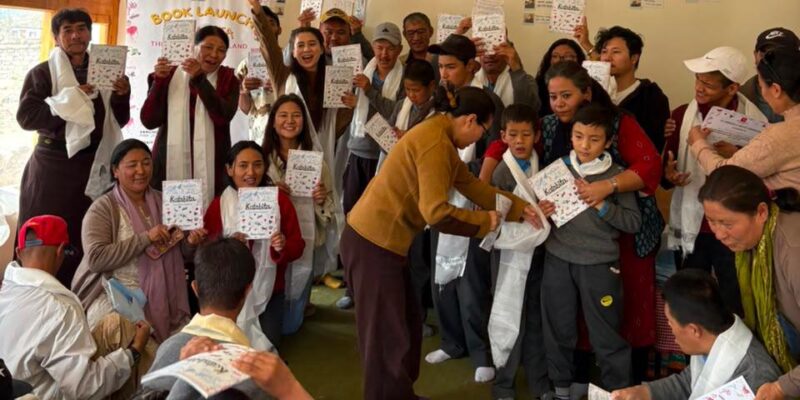
After nearly two years of dedicated writing and creative work that brought Katabita: The Hidden Doodleland to completion, a special celebration was held at Munsel School to honour the young artists whose illustrations became an integral part of the book. Certificates recognising the students as the official illustrators of the book, along with honorariums and copies of the book, were presented to the student illustrators in appreciation of their creativity and artistic contribution.
The journey of Katabita: The Hidden Doodleland began in 2024 when author Padma Angmo conducted a creative storytelling and art workshop titled “Superpower” at Munsel School. During the workshop, children were encouraged to discover the power in their imagination, express their creativity freely, and explore their own unique strengths.
The artwork created by the students became the visual foundation of Katabita, while Padma Angmo developed and wrote the story, transforming it from an initial picture-book concept into a children’s fantasy story and eco-fable exploring imagination, emotional intelligence, creativity, and our bond with nature.
The occasion was especially meaningful for the author as it marked the fulfilment of a promise she had made to the students — that their creativity and artistic expressions would find a place beyond the classroom through Katabita: The Hidden Doodleland. Her mother and father presented the certificates, and her father presented the honorariums to the student illustrators. Their presence added a meaningful significance to the celebration, as they have been a source of encouragement and support throughout the author’s journey.
The Principal, Munsel School Kunzang Palkit appreciated the creative journey of the students and highlighted the importance of encouraging children’s imagination, confidence, and expression.
Parents of the student illustrators also shared their experiences and expressed their happiness at seeing their children’s creativity recognised as part of Katabita: The Hidden Doodleland.
The Yige Publications team was also present during the celebration, joining the occasion to celebrate and honour the young illustrators of Katabita: The Hidden Doodleland.
The artists who supported the creative workshop process — Padma Chosdon and Idzes Lhamo — were also felicitated for their valuable contribution in guiding and nurturing the children’s artistic expression.
The official launch of Katabita: The Hidden Doodleland was held at Rangthang, Leh, where Chief Secretary of UT Ladakh Shri Ashish Kundra, IAS, formally launched the book in the presence of educators, literary enthusiasts, parents, students, and members of the community
Speaking on the occasion, Chief Secretary Shri Ashish Kundra, IAS, highlighted the significance of children’s imagination in interpreting mythology, spiritual narratives and the cultural heritage of a region. He described the process of documenting children’s imaginative expressions as fascinating, particularly in exploring the connections between spiritual stories, mythology and local landscapes. Referring to his published book on the Northeast, he spoke about Ladakh and the Northeast as significant frontier regions and reflected on how literature captures changing landscapes and the lived experiences of communities. He noted that Ladakh’s landscapes, people and cultural imagery leave a lasting impression. The Chief Secretary encouraged people to read and share Katabita: The Hidden Doodleland and extended his best wishes to the author, the young illustrators of Munsel School, and the publishing team.
Speaking on the occasion, Munsel School CEO Tsewang Yangzes shared the journey of Munsel School, which was established in 2008 with the support of Mara, a Swiss woman, to provide education, care, and support to children with disabilities. She emphasised the importance of creating greater awareness, ensuring equal opportunities, love, respect, and quality education for children with disabilities. She also highlighted the need for continued government support through improved facilities, resources, and services, calling for an inclusive society where every child is valued, supported, and given the opportunity to reach their full potential.
During the launch ceremony, the author, together with Chief Secretary Shri Ashish Kundra, IAS, and her family, paid tribute to her late grandmother, Abi Spaldon, who inspired the character of Abi Spaldon in Katabita: The Hidden Doodleland, making the tribute a meaningful part of the launch ceremony.
On the occasion, author Padma Angmo said:
“I wrote Katabita to bridge a gap in our education system — to nurture emotional intelligence in children from an early age, so they develop emotional regulation and healthy coping mechanisms while not being pressured to give up their creativity for productivity.
Stories and reading books help children understand and express their emotions, build empathy, develop resilience, and nurture imagination. In a rapidly changing world, where children face growing emotional pressures, increasing dependence on technology and social media, and wider challenges of our times, including substance abuse, books offer a meaningful space for reflection, creativity, connection and inner growth.
Children deserve high-quality literature that reflects their own landscapes, cultures, identities, and experiences. They deserve stories where they can see their worlds and realities represented.
Rooted in the spirit and ecology of Ladakh, Katabita: The Hidden Doodleland is a children’s fantasy story and eco-fable exploring imagination, nature, emotional growth, and learning to embrace change without losing what truly matters.
The title Katabita, a Ladakhi word referring to scribbles, doodles, or messy handwriting, was inspired by a creative writing and art workshop with the children of Munsel School. Their artwork inspired the title, and I imagined the story around it — my imagination, their art.”
The author also shared her vision of expanding Katabita: The Hidden Doodleland into a series, allowing the magical world of Katabita to continue unfolding through new stories, characters, and journeys.
Author Padma Angmo expressed her heartfelt gratitude to the students of Munsel School, their parents, teachers, and the entire Munsel School community for their trust, encouragement, and contribution to the journey of Katabita.
She also thanked Dr. Rigzin Chodon, founder of Yige Publications, and Yige Publications team designer Skalzang Otsal for their support during the publication process of the book.
She also expressed gratitude to Sir Eshey Tundup, renowned educator and Executive Director, LEDeG whose personality inspired the character of Meme Eshey, the wise Juniper tree in Katabita: The Hidden Doodleland.
As part of the author’s social commitment and give back to the community, a portion of the proceeds from Katabita: The Hidden Doodleland will support the welfare of children with disabilities in Ladakh. This reflects the book’s wider vision of inclusion, creativity, compassion, and equal opportunities for every child.
About the Book
When the first prayer flags flutter in the mountain wind, the Wind Horses awaken — and from their dance, Maryul is born.
In this mirror world of Ladakh, Bila the over-cautious cat and Khi the over-trusting dog live peacefully until a promise of great change arrives and the mountains begin to disappear.
As rivers lose their way and the land starts to unravel, the wise tree Meme Eshey sends Bila and Khi on a journey through the Forgetting Red Forest, ancient guardians, and hidden worlds — where everything that is lost cannot be easily found.
Will they find a way to bring the mountains back?

Comments