 By
By 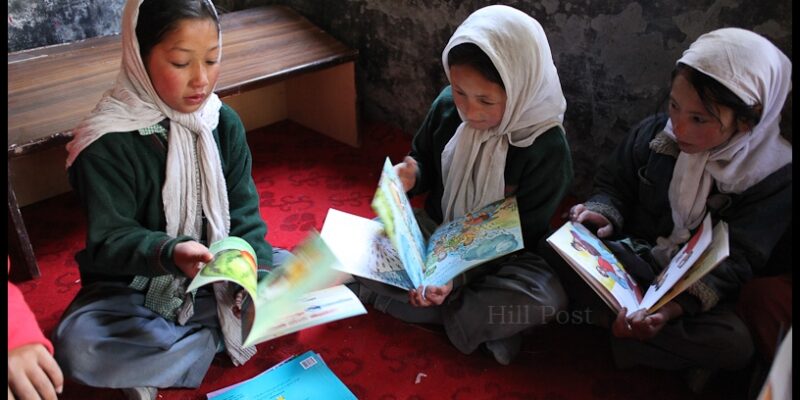
Kargil: Ladakh recorded a decline of 82 government elementary-level schools during 2025-26, according to data submitted by the Union Ministry of Education in the Lok Sabha, highlighting a major contraction in the government school network in the Union Territory.
The figures were shared by Minister of State for Education Jayant Chaudhary in a written reply to the Lok Sabha in response to a question concerning the closure of schools due to inadequate student enrolment.
According to the UDISE+ data, the number of government elementary schools in Ladakh fell by 82 during 2025-26. The decline comes at a time when the Union Government is emphasising improved access, enrolment and infrastructure under schemes including Samagra Shiksha, PM POSHAN and PM SHRI.
The Ministry of Education clarified that education is a subject in the Concurrent List of the Constitution, and decisions regarding the opening, closure and rationalisation of schools fall within the jurisdiction of the respective State and Union Territory governments.
Across India, the number of government elementary schools declined from 8,89,806 in 2024-25 to 8,79,940 in 2025-26, a reduction of nearly 9,900 schools.
Among the neighbouring northern regions, Himachal Pradesh recorded a decline from 11,724 to 11,465 government elementary schools, while Haryana witnessed a marginal reduction from 10,869 to 10,862.
In contrast, the number of government elementary schools in Jammu and Kashmir remained unchanged at 16,196 during the same period.
What does the decline mean for Ladakh?
The reduction of 82 schools assumes greater import in Ladakh because of its difficult terrain, scattered habitations and long distances between villages. In many remote areas, a government school is not merely an educational institution but the primary avenue of formal education available to children within their communities.
While school rationalisation can potentially improve the utilisation of teachers, infrastructure and other resources where enrolment has fallen sharply, it may also create challenges if students are required to travel longer distances to reach the nearest school.
For remote villages in Kargil and Leh and other newly created districts, longer travel distances could particularly affect younger children and families with limited transport facilities. In winter, when heavy snowfall and extreme weather can disrupt road connectivity, the impact of school consolidation could become even more pronounced.
The issue also raises questions about teacher deployment, enrolment trends, migration from remote villages and the future viability of small rural settlements.
Falling enrolment or rationalisation?
The Centre’s response links the issue to schools with inadequate student numbers and states that States and UTs are responsible for rationalisation. However, the decline in the number of schools does not by itself establish how many of the 82 schools in Ladakh were formally closed, merged or rationalised, or how many students and teachers were affected.
The data therefore brings renewed attention to the need for a district-wise assessment of the schools that have been closed or merged, including their enrolment, teacher strength, geographical location and the distance students now have to travel to access education.
Access to education improves at higher levels
The Union Government has simultaneously highlighted improvements in access to school education nationally.
Between 2018-19 and 2025-26, the Gross Access Ratio increased from 96.49% to 98.14% at the upper-primary level, from 88.24% to 95.05% at the secondary level and from 65.05% to 94.79% at the higher-secondary level.
The Centre said States and UTs are being supported through Samagra Shiksha and PM POSHAN to reduce dropouts and improve enrolment. Assistance is also provided for school infrastructure, opening and upgrading schools, Kasturba Gandhi Balika Vidyalayas, residential schools and hostels, transport allowances, enrolment campaigns, seasonal hostels, skill education and ICT facilities.
The PM SHRI scheme, meanwhile, aims to develop more than 14,500 selected schools as exemplar institutions showcasing the objectives of the National Education Policy (NEP) 2020.
Ladakh’s challenge goes beyond numbers
For Ladakh, the latest figures underline a larger policy challenge: how to balance school rationalisation with the constitutional and developmental objective of ensuring accessible education in geographically difficult areas.
A reduction in schools may make administrative and financial sense where enrolment has become extremely low. But in a region where villages are widely dispersed and transportation remains challenging, closing a school can have consequences beyond education—it can affect the attractiveness and sustainability of remote settlements.
The Ladakh administration may therefore need to examine whether alternative arrangements such as seasonal hostels, transport facilities, residential schooling, smart classrooms and strengthened cluster schools can ensure that rationalisation does not translate into reduced access for children in far-flung areas.
The latest UDISE+ figures are consequently likely to fuel discussion among parents, teachers and policymakers in Ladakh over whether the decline indicate demographic changes and low enrolment, or whether it could eventually deepen the educational and socio-economic challenges faced by remote communities.
For feedback or queries reach us at : editorladakhtimes@gmail.com

Comments